“Guangdong and Guangxi” search results (190)
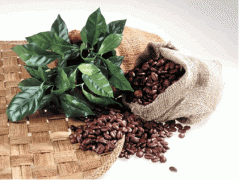
Basic knowledge of Fine Coffee an overview of the history of Yemeni coffee
Coffee scientific name: Coffea arabica), also known as coffee tree, Arabica coffee, etc., is the national flower of Yemen. Before the 6th century in the park, Yemen was called Arab, so the coffee trees transported from them to other places were also called Arabian coffee trees. The name coffee comes from the Arabic Qahwah, which means plant drink. Later, the coffee spread all over the world, and it was picked.
2015-06-17 Boutique Coffee Basics Common sense Yemen Development History Overview Scientific name Co
Shanghai prepares to set up a coffee exchange to sting coffee people in Yunnan
If pacorini, an Italian warehousing operator, sets up Asia's first coffee exchange in the Shanghai free trade zone, Yunnan, as the main producer of coffee, can only do what farmers do forever. Yunnan can only stay in the place where coffee raw materials are bought and sold, and Yunnan still has no pricing power and voice. A few days ago, the Yunnan Coffee Industry Association talked about the future of Yunnan coffee industry and the establishment of coffee trade in Shanghai.
2014-11-21 Coffee News Shanghai Coffee Exchange Yunnan Coffee
An exclusive interview and introduction to Wang Yangfa, chairman of Diou Coffee
[name] Wang Yangfa [gender] male [ethnic] Han [nationality] China [position] Dio Chairman [Company] Dio Catering Management Co., Ltd. [profile] Wang Yangfa was previously one of the founders of Shangdao. In 2001, he opened his own cafe, Diou, in Qingpu District, Shanghai. Since then, Jiangnan, North China, Beijing, Yunnan, Hunan, Jiangxi, within 3 years, he
2015-04-09 Dior Coffee Chairman Wang Yangfa exclusive interview introduction
Wanning held the first International Coffee Baking Masters Competition. 15 baristas from home and abroad participated in the competition.
After three days of intense competition, the 2016 Tops Cup Coffee roasting Masters Competition in Haikou ended in Shimei Bay. Haikou contestant Zhou Weiguang, Haikou contestant Chen Xiaode and Shenzhen contestant Li Chenlei won one to three places respectively. Gao Fangbiao, a contestant from Xinglong overseas Chinese Farm Coffee Factory, won the best taste award for the highest score in the cup test. This is the first time that Wanning has held an international coffee competition.
2016-08-08 Wanning held the first international coffee baking Masters domestic and foreign 15
On the Coffee Culture in China
In terms of natural conditions, many parts of China are very close to Latin America, South America, India, Indonesia and other places, with congenital conditions for coffee cultivation, but Chinese people have been drinking tea for thousands of years. As the origin of tea in the world, there is more or less neglect or contempt for coffee as a foreign drink in consumption habits and concepts.
2014-08-06 About China coffee culture natural conditions China many regions Latin America
International Coffee Day, let's talk about Yunnan beans.
Jiaxiang Guide: October 1, 2015, as the world's first coffee day, China's coffee industry seems to be more excited than the National Day. Although China is not yet a member of the International Coffee Organization, Yunnan Douzao is currently the fastest growing bean in China. Will Yunnan Dou lead China into the world coffee industry in the near future? Wait and see ~ in China, have a cup of Yunnan
2015-10-05 International Coffee Let's talk about Yunnan Jiaxiang Guide 2015 October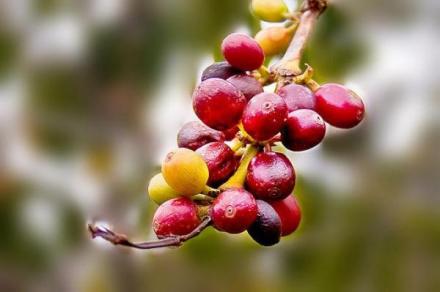
International Coffee Day, let's talk about Yunnan beans.
Jiaxiang Guide: October 1, 2015, as the world's first coffee day, China's coffee industry seems to be more excited than the National Day. Although China is not yet a member of the International Coffee Organization, Yunnan Douzao is currently the fastest growing bean in China. Will Yunnan Dou lead China into the world coffee industry in the near future? Wait and see ~ in China, have a cup of Yunnan
2015-10-07 International Coffee Let's talk about Yunnan Jiaxiang Guide 2015 October
Coffee in Chinese Culture
The history of the introduction of coffee into China is not long, and it was not until 1884 that coffee was first planted in Taiwan Province.
2014-06-17 Coffee culture Chinese coffee culture coffee encyclopedia
What kind of plant does coffee belong to?-what kind of plant is coffee grounds suitable for growing?
In fact, the Arabs began to grow coffee in 525 BC, and chewing fried coffee beans became popular in the Arab region. In 890 AD, Arab merchants sold coffee beans to Yemen, and Yemenis made coffee beans into drinks for the first time. In the 15th century, coffee was introduced into Europe, Asia and soon into America. By the 18th century, tropical and subtropical regions around the world were widespread.
2016-10-17 Coffee belongs to what plant suits in fact 525 BC Allah.
Indonesian civet coffee with special flavor and mellow taste
Kopi Luwak, the world's most expensive coffee, costs hundreds of dollars a pound and is processed from civet feces. The civet eats the ripe coffee fruit and passes it through the digestive system. Due to fermentation in the stomach, the coffee beans produced are described by experts as smooth, taste like chocolate, and taste like chocolate.
2016-09-01 Taste Special Aromatic Indonesian Musky Coffee Flavor Manor Fine
The spread and Development of Coffee Culture (2)
The spread and Development of Coffee in Europe from the end of the 15th century to the beginning of the 16th century, coffee was already a popular drink in the Middle East, but it was also regarded as a medicine. European ambassadors and merchants in the Turkish Empire also believed that coffee was a healthy drink with special curative effects, and many positive comments helped to import coffee into Europe. Lovov, a famous German doctor and botanist, wrote as early as 1582.
2014-11-05 Coffee culture coffee culture history coffee communication coffee development
Basic knowledge of fine coffee the growth environment of small-grain coffee
Small grain coffee scientific name: Coffea arabica family genus: Rubiaceae coffee genus morphological characteristics: small trees or large shrubs, plant height 5 meters 8 meters. Base usually much branched, old branches gray-white. Nodes inflated, young branches glabrous. Leaves thinly leathery-ovate-lanceolate or lanceolate, apex long acuminate, base cuneate or slightly obtuse, entire or shallowly wavy, both surfaces glabrous. Cymes several clustered in leaf axils
2014-10-29 Coffee knowledge boutique coffee basic knowledge small grain coffee growing environment
Chinese Coffee Culture
The history of the introduction of coffee into China is not long, and it was not until 1884 that coffee was first planted in Taiwan Province. In the mainland of the motherland, the earliest coffee cultivation began in Yunnan. At the beginning of the 20th century, French missionaries brought the first batch of coffee saplings to Binchuan County, Yunnan Province, and began to grow coffee in the mainland. In terms of natural conditions, many parts of our country and
2014-08-06 China coffee culture coffee introduction history not long until 1884
Talking about Coffee beans
1. Summary: coffee is a perennial evergreen shrub or small tree of Rubiaceae. It is native to tropical Africa and has been cultivated for more than 2000 years. The Arabs began to grow coffee in 525 BC, and it was popular for Arabs to stir-fry coffee beans. They began to grow coffee beans on a large scale after the 15th century, and were widely distributed in the tropics and subtropics of Europe, Asia, Africa and Latin America after the 18th century.
2014-07-02 Coffee beans coffee bean history coffee bean uses
The characteristics of Western Coffee Culture
Like the tea culture in China, coffee culture also contains rich history and connotation. The Arabs first dried and boiled the coffee beans and drank the juice as a stomach medicine, thinking that it could help digestion. It was later found that coffee also had a refreshing effect. Because Islam forbids religious people to drink alcohol, coffee is used instead of alcoholic beverages as a refreshing drink. ten
2014-05-28 Western culture coffee characteristics coffee beans
To show you the true face of coffee.
Small and round dark brown coffee beans, quietly emitting a fragrant fragrance in the grinder, injected into the cup showing the beautiful color of amber, these are the three very deep impressions of coffee. As you explore the history and beauty of coffee, you can also see the coffee trees that are caressed by the tropical sun and whose leaves twinkle. It has small white flowers similar to jasmine.
2014-08-22 Coffee knowledge coffee tree species coffee powder Yunnan coffee
Strong aroma of Yunnan Tieka Coffee made in China small grain flavor describes the roasting degree of planting environment
Small-grain coffee is suitable for growing in the mountains at an altitude of 800 to 1800 meters. If the altitude is too high, it will taste sour, and if it is too low, it will taste bitter. Small grains of coffee are mostly planted in dry and hot valleys about 1100 meters above sea level, so they are moderately sour, rich and mellow. There is a unique environment suitable for the growth of small seed coffee in many areas of Yunnan, and the quality of small seed coffee is excellent. The planting area is mainly distributed in the
2016-10-08 Aroma rich Chinese domestic Yunnan pickup coffee small grains flavor description
The development and change of coffee!
1. Macro-environmental analysis with the development of the times and the further change of people's concept of life, the coffee industry is also developing at a rapid speed. The promotion of urbanization and the construction of culture are the driving force for the development of coffee shops. Government policy support for college students to start a business. With the popularity of coffee culture and the rise of petty bourgeoisie sentiment, coffee shops are becoming one of the ways for people to communicate and enjoy themselves.
2014-08-28 The development of coffee
The development and change of coffee!
1. Macro-environmental analysis with the development of the times and the further change of people's concept of life, the coffee industry is also developing at a rapid speed. The promotion of urbanization and the construction of culture are the driving force for the development of coffee shops. Government policy support for college students to start a business. With the popularity of coffee culture and the rise of petty bourgeoisie sentiment, coffee shops are becoming one of the ways for people to communicate and enjoy themselves.
2014-08-28 The development of coffee
A brief talk on understanding coffee beans
1. Summary: coffee is a perennial evergreen shrub or small tree of Rubiaceae. It is native to tropical Africa and has been cultivated for more than 2000 years. The Arabs began to grow coffee in 525 BC, and it was popular for Arabs to stir-fry coffee beans. They began to grow coffee beans on a large scale after the 15th century, and were widely distributed in the tropics and subtropics of Europe, Asia, Africa and Latin America after the 18th century.
2014-09-25 Understand coffee beans and talk about coffee beans